
Nature risks of building materials
In this research, we broaden the perspective on sustainable construction. Where the current focus lies on the impact of building materials on climate change, we examine the nature risks of building materials. We offer recommendations for nature-inclusive supply chains.
Any data available for download is released under CC BY-SA 4.0.
The natural world is under significant pressure. Seven of the nine planetary boundaries have now been exceeded. Alongside climate change, biodiversity loss poses a serious threat to healthy and safe human life. As a result, an increasing number of organisations want to 'build within planetary boundaries'.
Recommendations
The report is relevant for everyone in the sector. We offer recommendations for sector-wide and material-specific solutions. The sector-wide recommendations are:
- Use less primary material, from planning through to construction
- Pursue accelerated CO₂ reduction, lowering impacts for concrete, steel and asphalt
- Ensure responsible sourcing, for materials including sand, gravel, ore and timber
Key conclusions
In many cases, the production of building materials causes a greater environmental impact than the extraction of raw materials itself. The extraction and combustion of fossil fuels for energy-intensive production processes is an important contributing factor.
The environmental impact and nature risks of abiotic materials (concrete, steel, asphalt) differ from those of biotic materials (timber). Whereas abiotic raw materials cause environmental impact through energy-intensive production processes, biotic raw materials require land in order to grow.
The most significant nature risks per material are as follows:
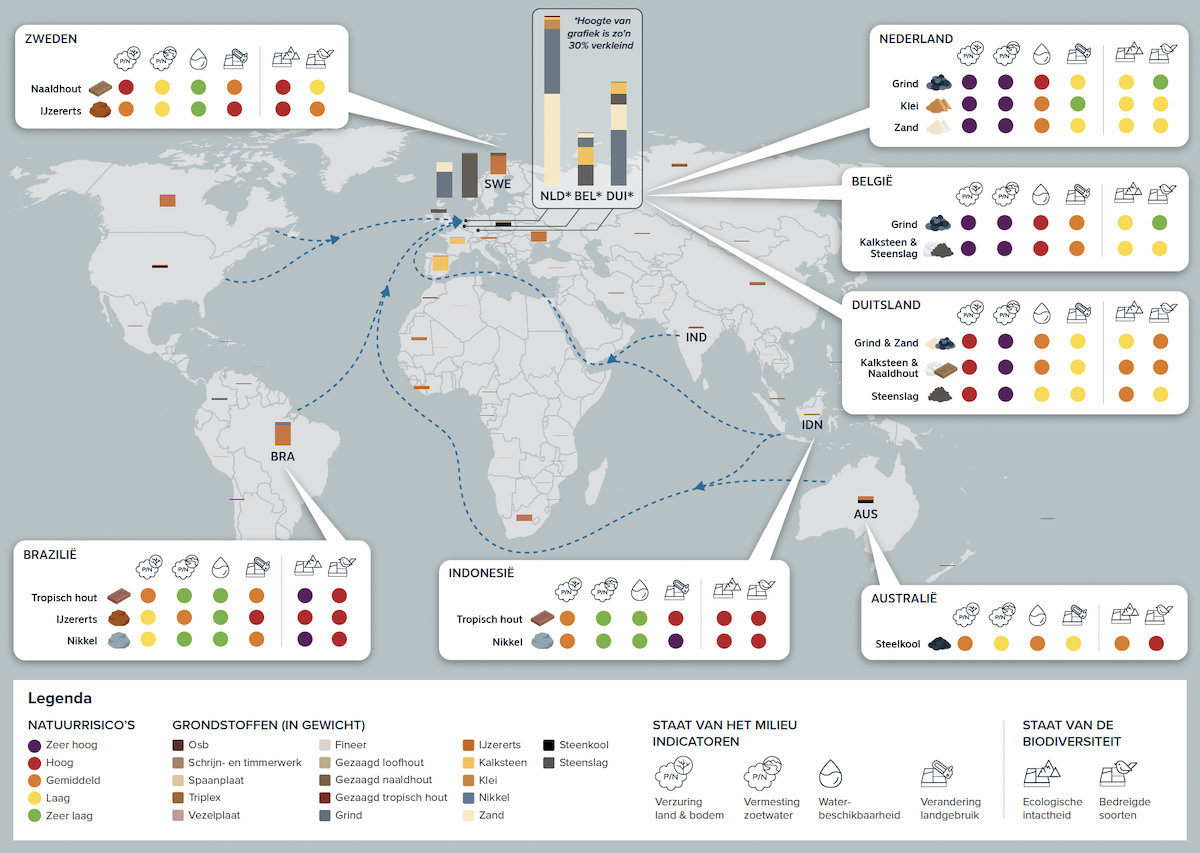
- For concrete, there are high nature risks during the extraction of sand and gravel (including in Limburg and Germany), due to water use and biochemical pollution at locations already experiencing water shortages and high nitrogen concentrations.
- For asphalt, the same risks apply regarding water use and biochemical pollution during sand and crushed stone extraction.
- For steel, there are high nature risks during iron ore and nickel mining in countries including Brazil and Indonesia, driven by land use and high local ecological integrity.
- For timber, there are high nature risks during the harvesting of tropical wood, partly due to the large number of endangered species in tropical forests at harvesting locations.
Innovative methodology
The recommendations are based on extensive research into the nature risks associated with the extraction of raw materials for building materials. It provides insight into the environmental impact and nature risks at extraction sites, and is grounded in the methodology of Science-based Targets for Nature (SBTN).
A better understanding of these risks enables clients and companies to more effectively drive the sustainability of material supply chains for the construction sector. The study’s approach also offers a step-by-step plan that allows organizations to gain insight into their own supply chains.



.png)
